Cure Onions After Harvest for Long Winter Storage
- Hands on
- 90 min
- Start to finish
- 21 days
- Season
- summer
- Level
- easy
- Makes
- a winter's supply of stored onions
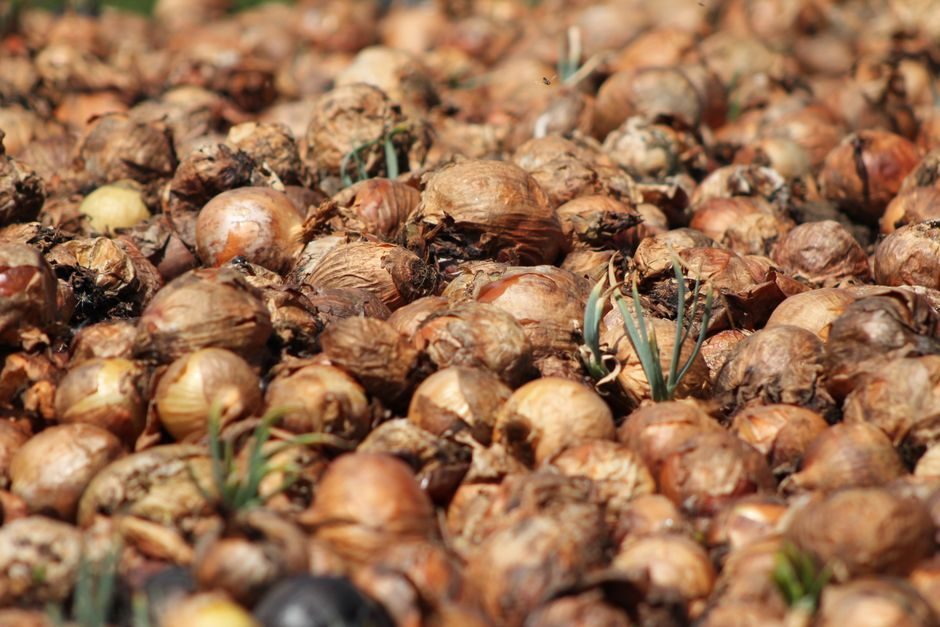
Most allotment onions fail in storage not because they were grown badly, but because they were stored too soon. The outer skin has to turn completely papery and the neck has to shrivel and seal before the bulb is truly closed to rot. That takes two to three weeks of warm, moving air — which late August usually provides. Done right, a good crop of onions will sit on a shelf until February without a soft one among them.
What you need
Step by step
-
Check that the onions are ready before lifting. The foliage should have fallen over naturally and the necks should be thin, papery, and beginning to wither. Any bulb with a thick, fleshy neck has bolted and will not store; set those aside for immediate use in the kitchen.
10 min -
Loosen each bulb by sliding a fork under it from the side — do not pull by the tops, which bruises the neck. Lift gently and lay on the soil surface for an hour if the day is dry, which gives the outer skin a first airing.
30 min -
Move the bulbs to a single layer on a mesh tray, slatted shelf, or old window screen propped on bricks so air can circulate underneath. Do not pile them. A greenhouse bench, cold frame lid, or a covered patio table works well. If the weather is dry and warm, outdoors is fine — bring them under cover before any rain.
15 min -
Leave them to cure for two to three weeks. Check every two or three days, turning any that look damp on their undersides. Remove immediately any bulb that softens, smells sharp, or shows a patch of grey mould — do not put it back.
5 min -
The onions are cured when the outer skins rustle and feel completely dry, the neck is shrivelled and brittle rather than soft, and the roots snap rather than bend. This typically takes 14 to 21 days in warm conditions, longer in a cool August.
5 min -
Once cured, trim the roots to about 1cm with scissors. For rope storage, leave 20–25cm of dried stem; for net bags or slatted trays, trim the neck to 3–4cm. Rub off any loose soil with your hands — do not wash them.
20 min -
Store in a cool (4–10°C), dark, well-ventilated place: a shed, garage, or cool pantry. Hang ropes from a rafter, or spread bulbs one layer deep in open crates. Check the store once a week and use any that begin to soften before they spoil the batch.
5 min
Afterwards
Check your store weekly through autumn and winter. Pull out and eat any onion that goes soft at the neck or develops a spongy feel — one rotting bulb left in a net will spread to those touching it. By late January, any remaining onions may begin to sprout; use them promptly or slice off the green shoot and cook the bulb.
Questions
Can I cure onions indoors?
Yes, if the room is warm (above 20°C) and you can open a window for airflow. A spare room or a dry utility room works. Avoid the kitchen — steam from cooking raises humidity and slows the cure.
What if August is wet?
Bring the trays under cover — a shed with the door open or a polytunnel with the vents up. The key is airflow, not direct sun. Allow more time: a cool, damp curing environment may need four weeks rather than two.
Why are some of my onions going soft straight away?
Thick-necked onions (those that bolted) or bruised ones will not cure. They soften first because the neck has never properly closed. Catch them early at the daily check and eat them; there is nothing wrong with their flavour.
Do I need to grow a special variety to get good storage?
Long-keeping varieties such as Sturon, Bedfordshire Champion, and Red Baron hold better than fast-maturing types, but the curing process matters more than the variety. A well-cured Ailsa Craig will outlast a poorly cured Sturon.