Lift and Store Maincrop Carrots for Winter Keeping
- Hands on
- 60 min
- Season
- autumn
- Level
- easy
- Makes
- roughly one storage box of carrots from a 3m row, keeping until around April
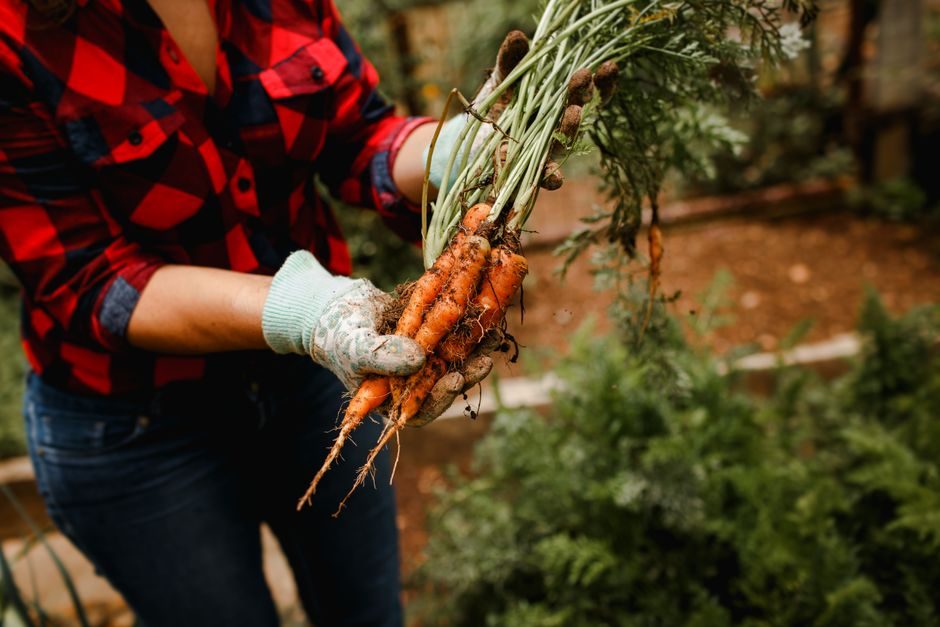
Maincrop carrots left in wet ground much past the first hard frosts turn soft, split, or disappear to slugs overnight. Lifting them onto a box of damp sand keeps them in the same eating condition as the day you pulled them, right through to spring, and takes an afternoon for a full row.
What you need
Step by step
-
Choose a dry day. Twist or snip off any foliage that has flopped over so you can see the row clearly.
5 min -
Push the fork in a hand's width clear of the row and lever gently, working along the row rather than pulling carrots out by the tops, which snaps them.
20 min -
Lift the carrots and knock off loose soil with your hands. Don't wash them — wet skin is what starts rot in storage.
10 min -
Twist the foliage off an inch above the crown rather than cutting it with a knife, so the carrot doesn't try to regrow in the box.
10 min -
Set aside any that are forked, split or chewed by slugs — eat these first, since they won't keep.
5 min -
Line the box and layer the sound carrots in so they don't touch each other, covering each layer with about 2cm of damp sand or compost and finishing with a layer on top.
10 min
Afterwards
Store the box somewhere cool and frost-free, such as a shed or garage, rather than anywhere heated. Check it once a month and pull out anything that has gone soft before it spreads to the rest. Carrots layered in sand this way typically keep until around April.
Questions
Can I just leave the carrots in the ground over winter instead?
In free-draining soil, yes, with a thick straw mulch over the row. In heavy or wet ground they're prone to splitting and slug damage, so lifting into a box of sand is the more reliable route.
Do I need to wash the carrots before storing them?
No. Washing wets the skin and encourages rot. Brush off loose soil with your hands and leave the rest.
What if I don't have sand?
Old potting compost works just as well. The point is a loose, slightly damp layer that keeps the roots in the dark and stops them touching each other.
Why twist the tops off instead of cutting them?
A clean knife cut can still leave the growing point intact, and it will try to sprout in storage, drawing moisture out of the root. Twisting removes the point itself.