Divide and Replant Overgrown Perennial Clumps in Autumn
- Hands on
- 90 min
- Season
- autumn
- Level
- moderate
- Makes
- three to six new plants from one established clump
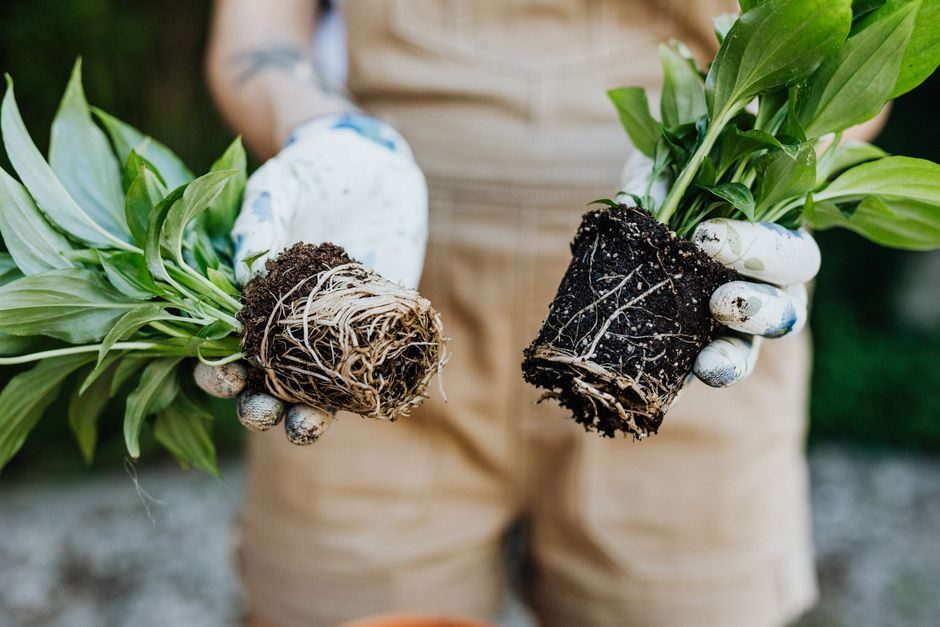
A perennial that has filled its space for three or four years stops flowering as well as it did — the centre goes bare and woody while growth pushes outward each year. Lifting the whole clump and splitting it into smaller, younger-rooted sections fixes that, and gives you plants to fill gaps elsewhere for nothing. Autumn suits perennials that have already flowered this summer: the soil is still warm enough for new roots to establish before the ground turns cold, and the dying top growth makes the crown easy to see and work on. Leave anything flowering now, such as asters or heleniums, until spring, when it recovers from the disturbance before having to work hard again.
What you need
Step by step
-
Cut back the dying top growth with secateurs to about 10cm, so you can see the crown and work without fighting foliage.
10 min -
Push a garden fork in a circle roughly 20–30cm out from the crown, angled inward, and work around the clump to loosen it on all sides before trying to lift it whole.
15 min -
Lever the clump up from underneath and lift it clear of the hole, keeping as much root and soil attached as you can; set it on a tarp or board rather than bare ground.
10 min -
Split it into sections, each with its own shoots and a fair share of roots. Two forks pushed back to back into the centre and levered apart works for fibrous roots; a spade or old knife driven straight down is often needed for a tough, woody crown.
15 min -
Discard the dead, woody centre most clumps develop after a few years — it won't flower well again — and keep the younger growth from the outer ring.
5 min -
Barrow over a wheelbarrow load of compost and fork it into the planting hole and surrounding soil, so the new divisions aren't going straight back into the same exhausted ground.
10 min -
Replant each division with a trowel at the same depth it was growing before, spacing by the plant's eventual spread rather than how small the piece looks now — allow 30–45cm for most border perennials.
15 min -
Water in thoroughly, then mulch around, not over, the crowns to hold moisture while the roots re-establish.
10 min
Afterwards
Water through any dry spell for the next few weeks — new divisions are shallow-rooted and dry out faster than the established clump did. After the first hard frost, check that frost heave hasn't pushed any crowns up out of the soil, and firm them back in if it has. Leave the discarded woody centres on the compost heap rather than the border.
Questions
Can I divide a perennial that's still flowering?
Leave it until it finishes, or until spring if it's an autumn-flowering variety like asters or heleniums. Dividing while a plant is trying to flower sets it back further than waiting would.
What if a clump won't come apart by hand?
Woody crowns, which sedums and hostas develop after a few years, often need a spade or old knife driven straight down through them. Brace the clump against the ground rather than holding it in your hands.
How soon will the divisions flower again?
Most perennials sulk for a year and flower properly the second spring, though vigorous growers like daylilies sometimes manage a few blooms the first year.
Do all perennials need dividing?
No. Plants with a single woody base, such as lavender or peonies, resent being split and are better left alone or increased from cuttings instead.