Harvest Garden Grapes and Dry Them into Raisins
- Hands on
- 90 min
- Start to finish
- 13 hours
- Season
- autumn
- Level
- easy
- Makes
- roughly 250g of raisins from 1kg of fresh grapes
A garden or allotment vine rarely gives enough grapes at once to eat fresh before the first ones spoil, and outdoor-grown dessert grapes are usually smaller and more pippy than the ones from a shop. Drying them into raisins solves both problems at once: the sugars concentrate as the water leaves, the skins toughen enough to keep, and a scattered, awkward crop turns into something that stores through winter. It takes a low oven and most of a day, nearly all of it unattended.
What you need
Step by step
-
Taste a few grapes from different parts of the vine. They're ready once they taste sweet right through, not just where the sun has reached them.
10 min -
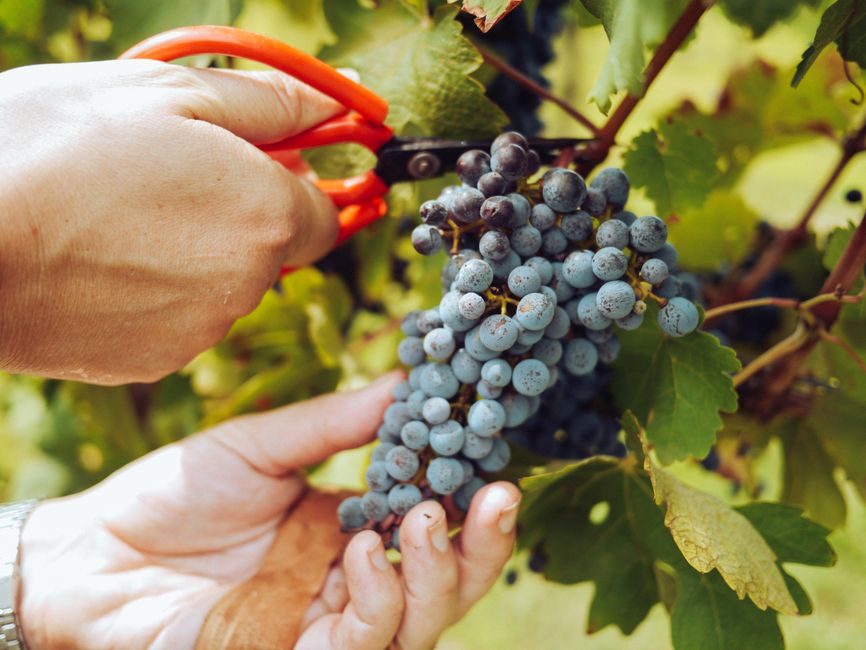
Snip whole bunches from the vine with secateurs, cutting the stalk rather than pulling the grapes loose.
15 min -
Pick over the bunches and remove any grapes that are split, shrivelled, mouldy or still hard and sour, along with stray leaves and insects.
10 min -
Wash the grapes in a bowl of cool water, then pat them dry with a clean towel.
10 min -
Pull the grapes off their stalks. Halve any larger ones on a chopping board, or pierce whole small ones with the tip of a knife, so moisture can escape through the skin.
15 min -
Spread the grapes cut-side up in a single layer on trays lined with baking parchment, leaving gaps so air reaches all sides.
10 min -
Set the oven to its lowest setting, around 60-70C (gas mark quarter or lower), and prop the door open 3-4cm for airflow.
5 min -
Dry for 8-12 hours, turning the grapes over halfway through and swapping tray positions if using more than one shelf.
600 min -
Check for doneness: raisins should be wrinkled all over and chewy, with no soft, wet pulp inside when you cut one open. Keep drying in one-hour stretches if still damp.
30 min -
Let the raisins cool completely on the tray before storing; packing them away warm traps condensation that encourages mould.
60 min
Afterwards
Store the cooled raisins in a clean, airtight jar out of direct light; they'll keep for several months in a cool cupboard. Check the jar after the first week — condensation on the inside of the lid means they weren't fully dry, so tip them back onto a tray for another hour in a low oven. After that, check every month or so and discard any that have turned sticky, sour-smelling or spotted with mould.
Questions
Can I dry grapes that have seeds in them?
Yes. Pierce them with a knife tip before drying so moisture can escape. The seeds just mean more to pick around later, not a safety issue.
Do I need a dehydrator?
No. A domestic oven on its lowest setting with the door ajar does the same job, just less evenly than a dehydrator's fan.
Why are my raisins still sticky and soft after 12 hours?
They likely need longer, or weren't spread in a single layer. Crowded or stacked grapes trap moisture between them and dry unevenly.
Can I use grapes that aren't fully ripe?
They'll dry, but underripe grapes are sharp, and raisins made from them stay sour rather than sweetening. It's worth waiting.