Harvest, Husk and Dry Walnuts for Winter Storage
- Hands on
- 120 min
- Start to finish
- 21 days
- Season
- autumn
- Level
- moderate
- Makes
- a basket of clean, dry-shelled walnuts that will keep for months
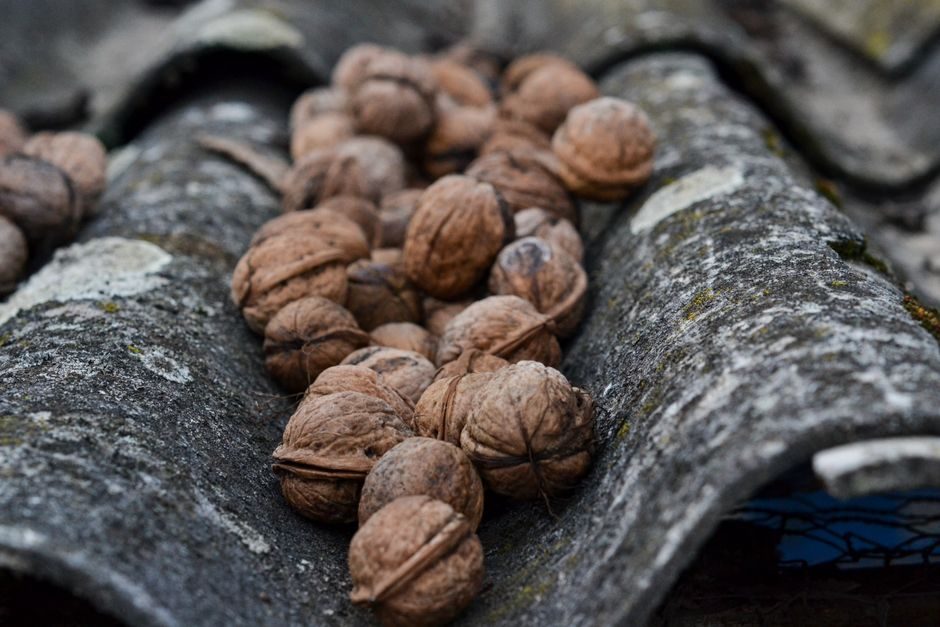
Walnuts drop through late September and October once their green husks split, and gathering them is the easy part. What determines whether they keep is what happens in the week after: husking promptly, testing for soundness, and drying slowly enough that the kernel inside doesn't sweat and spoil before the shell is ready.
What you need
Step by step
-
Gather fallen walnuts from the ground within a day or two of them dropping, before the husks mould or ants move in.
20 min -
Pull on gloves and old clothes, since the green husk stains skin and fabric for days. Split each husk with your thumbs and peel it away, or roll the nut underfoot on a hard path to loosen it.
30 min -
Scrape off any husk fibres still clinging to the shell with a blunt knife or a stiff brush, working outdoors or over newspaper.
20 min -
Drop the husked nuts into a bucket of water. Skim off and discard any that float — they're hollow or have dried out inside — and keep the ones that sink.
10 min -
Spread the sound nuts in a single layer on a wire rack or mesh tray so air reaches all sides, and set it somewhere dry, shaded and draught-free such as a shed or garage.
15 min -
Turn the nuts once a day for the first week so they dry evenly rather than sweating on the side touching the rack.
10 min -
Leave them for two to three weeks in total. They're ready when the shells sound hollow and the kernel rattles faintly when you shake a nut.
5 min -
Pack the dried nuts loosely into net bags, a wooden crate or cardboard boxes — not sealed plastic, which traps damp — and keep the shells on until you need them.
10 min
Afterwards
Wash husk stains off tools and hands with a nail brush; they fade over about a week rather than with one scrub. Check stored nuts monthly for the first couple of months and pull out any that smell sour or feel soft, since one spoiling nut can taint its neighbours. Kept cool and dry, shelled-in nuts hold for up to a year; shell a batch and freeze the kernels if you want them to last longer.
Questions
Can I use windfalls that have been on the ground a few days?
Only if they still feel firm and the husk hasn't gone black and slimy. Once mould sets into the husk it can reach the shell and taint the kernel, so when in doubt add them to the compost instead.
Do the husks have any use, or should I just discard them?
They can go down as mulch on a path away from beds, but keep them out of compost that will touch other plants — juglone from walnut husks suppresses growth in many vegetables and persists for months.
How do I know they're properly dry, not just dry on the outside?
Crack one open. The kernel should snap cleanly rather than bend, and the inner skin should be dry rather than rubbery. If it bends, give the whole batch another week.
Why do some nuts float in the water test?
A floating nut is usually hollow, insect-damaged, or has shrivelled inside the shell. The water just makes this visible before you've given it drying space you didn't need to.