Take Hardwood Cuttings from Currant and Gooseberry Bushes
- Hands on
- 70 min
- Season
- autumn
- Level
- easy
- Makes
- around a dozen new currant or gooseberry plants by next autumn
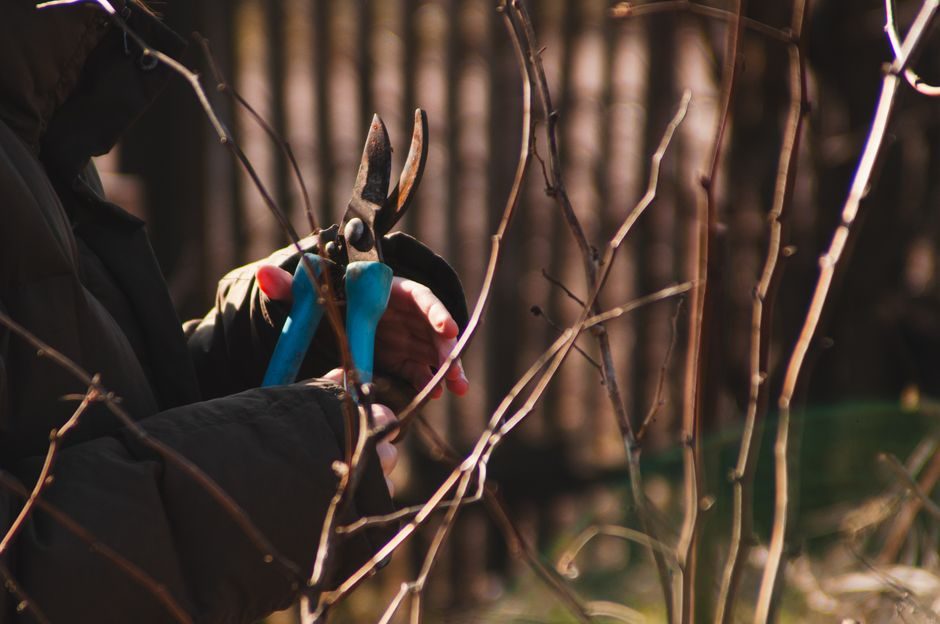
Currant and gooseberry bushes are propagated for free from their own prunings. Cut lengths of this year's growth once the leaves have dropped, push them into a slit trench in a spare corner, and leave them alone until next autumn. Most root without any special treatment, giving you new plants at no cost beyond the trench and a bit of patience. The trade-off is time: a cutting takes a full growing season to earn its own roots, where a bought bush fruits sooner.
What you need
Step by step
-
Choose this year's growth on a healthy currant or gooseberry bush: straight, pencil-thick shoots with no sign of disease. Wait until the leaves have dropped before cutting.
10 min -
Cut each stem to 25-30cm. Make a straight cut just below a bud at the base and a sloped cut just above a bud at the top, so you can always tell which end is which.
15 min -
For redcurrants, whitecurrants and gooseberries, rub off all the buds except the top three or four, leaving a clear leg so the plant doesn't sucker from below ground later. Leave every bud in place on blackcurrant cuttings, which are grown as a stooled bush from the base.
10 min -
Dig a narrow trench about 20cm deep in a sheltered, out-of-the-way spot, and trickle a 5cm layer of sharp sand along the bottom to improve drainage.
15 min -
Push each cutting in vertically against the trench side, a hand's width apart, so roughly a third of its length stands above the soil.
10 min -
Backfill, firm the soil around the cuttings with your boot, water well, and label the row.
10 min
Afterwards
Water the row in dry spells next summer and keep it weeded, since cuttings compete badly with grass. Next autumn, tug each one gently: resistance means it has rooted and can be moved to its final spot. Leave any that pull free for another season rather than discarding them.
Questions
How long before they're rooted?
Most are ready to move by the following autumn, about a year after cutting. Slow ones are worth leaving for a second season rather than giving up on.
Do I need rooting hormone?
No. Currants and gooseberries root easily from hardwood cuttings without it; it's more useful for trickier subjects like roses.
Can I use prunings from a bush that looks unwell?
Only take cuttings from vigorous, disease-free wood. A weak cutting makes a weak plant, and diseased wood can carry infection into your new stock.
My currant bush is already grown on a leg. Where do I cut from?
Take this year's growth from the top of the plant, not the older framework wood below.