Turn a Vegetable Glut into a Quick Vinegar Pickle
- Hands on
- 50 min
- Start to finish
- 24 hours
- Season
- autumn
- Level
- easy
- Makes
- about two 1-litre jars
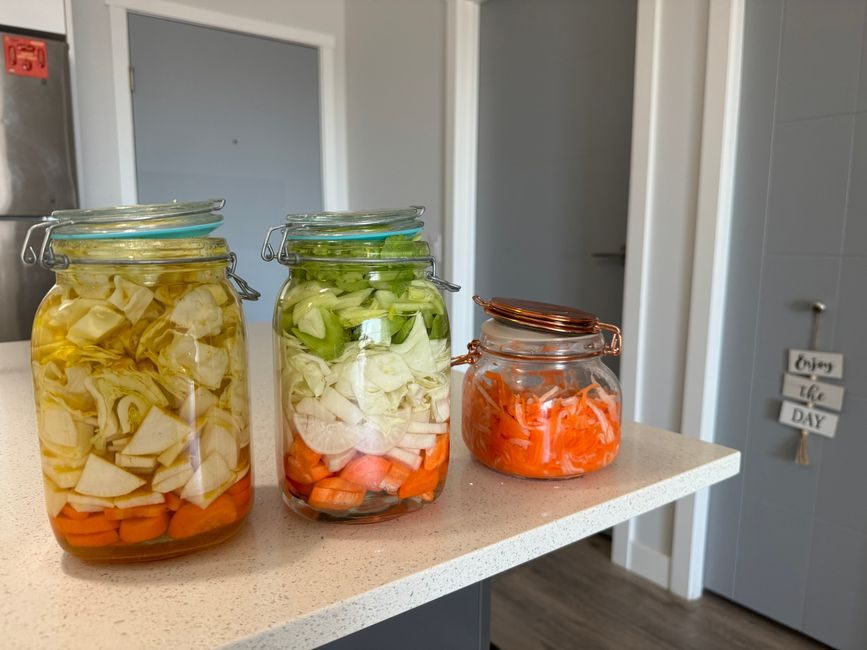
By September the same few crops are cropping faster than anyone can eat them fresh — courgettes doubling in size overnight, beans coming on in handfuls, cucumbers turning soft if they sit a day too long. A quick vinegar pickle deals with about a kilogram of glut vegetables in under an hour using a hot vinegar brine, not a canning process. It is a fridge pickle rather than a shelf-stable preserve: the jars go straight into the fridge once cool, and the pickle is eaten within a few weeks. That is what keeps the method simple and safe, with no pressure canner, water bath or tested processing time involved.
What you need
Step by step
-
Wash jars and lids and sterilise them in a pan of boiling water for a few minutes, then stand them upside down on a clean cloth to air-dry.
10 min -
If including beans, top and tail them, cut into short lengths and blanch in boiling water for two minutes before plunging into cold water; other vegetables can be sliced raw.
10 min -
Slice the remaining vegetables into rounds or batons no thicker than 1cm, so the brine reaches the centre within a day.
10 min -
Pack the vegetables into the jars fairly tightly, tucking in the bay leaves, mustard seed and coriander seed as you go.
5 min -
Bring the vinegar, water, sugar and salt to the boil in a pan, stirring until the sugar and salt dissolve.
5 min -
Pour the hot brine over the vegetables to within 1cm of the jar top, making sure everything is submerged.
5 min -
Seal the jars while still warm, let them cool to room temperature on a folded cloth, then move them to the fridge.
5 min
Afterwards
Keep the jars in the fridge and eat within four to six weeks; the flavour is thin on day one and keeps improving for about a week. Once a jar is opened, keep the vegetables submerged in brine and lift them out with a clean utensil each time. Wipe up any spilled brine promptly, since vinegar can dull some worktop finishes over time.
Questions
Can I process these jars to make them shelf-stable instead of keeping them in the fridge?
No — this method relies on refrigeration, not on a tested processing time, so it is not a pantry-stable preserve. Treat it as a quick way to use up a glut, not a substitute for proper canning.
Which vegetables work best?
Courgette, beans, cucumber, carrot and cauliflower all keep some crunch. Very watery vegetables like tomatoes turn soft and are better used another way.
Do beans really need blanching first?
Yes — raw beans stay tough in a cold brine, so two minutes in boiling water followed by cold water makes a real difference to the texture.
How long will the jars keep?
Once made, keep them in the fridge and use within four to six weeks. Discard anything with a bulging lid, an off smell, or unexpected cloudiness.