Clean, Sharpen and Oil Secateurs Before Winter Storage
- Hands on
- 48 min
- Season
- autumn
- Level
- easy
- Makes
- one pair of clean, sharp secateurs, ready to store or to keep using
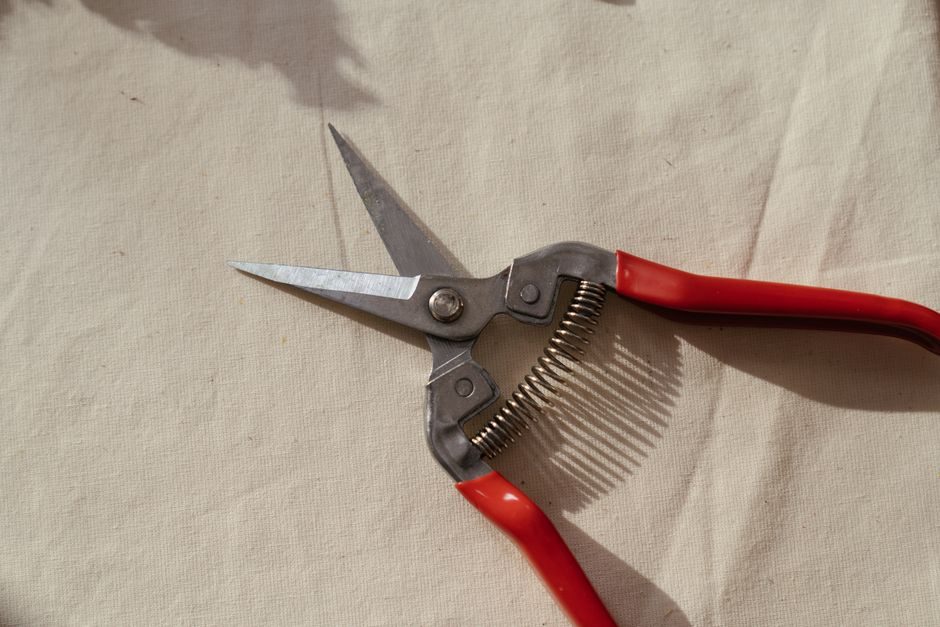
Secateurs that go into the shed dirty come out in spring with a stiff pivot and a dull edge, and a dull blade crushes stems instead of cutting them cleanly, which is how disease gets into a plant. Cleaning off the season's sap and rust, putting a fresh edge on the blade, and working oil into the moving parts takes under an hour and means the tool is ready the next time you need it, rather than something to deal with before you can use it.
What you need
Step by step
-
Wipe soil and dried sap off the blades and handles with a dry cloth.
5 min -
Mix the vinegar and water in a jar and soak the cutting head for ten minutes to loosen rust and dried sap.
10 min -
Scrub the blades with the wire wool, working along the bevel, until surface rust and grime lift off.
8 min -
Rinse in clean water and dry thoroughly. Any moisture left on the pivot invites fresh rust.
3 min -
Hold the blade at the same angle as its existing bevel and draw the sharpening stone along the cutting edge, five or six strokes on the bevelled side only.
10 min -
Wipe the blade with a cloth dampened with rubbing alcohol to lift off metal filings and leftover sap, then dry again.
4 min -
Open the blades fully and work a few drops of oil into the pivot, the spring and the closing latch, moving the blades through their full travel to spread it.
5 min -
Wipe off the excess oil so it doesn't collect grit, then close and lock the blade before storing.
3 min
Afterwards
Store the secateurs somewhere dry — a hook in the shed or a drawer, not a damp bucket of tools by the back door. If they'll sit unused for months, a light film of oil left on the blade after the final wipe helps it survive the winter without new rust. Check the edge before the first cut of spring; a season in storage rarely dulls it, but a knock in transit can.
Questions
How often should I do this?
Twice a year is plenty for a pair that sees regular use through the season — once as growth picks up in spring, once before they go into winter storage.
My secateurs are rusted solid — will vinegar fix that?
Vinegar loosens surface rust and dried sap, but it won't rescue a pivot that's seized. Work a few drops of oil into a stuck pivot and give it time before trying to force it open.
What oil should I use?
Any light general-purpose oil works. Camellia oil is the traditional choice for edge tools, but a household 3-in-1 or plain mineral oil does the same job.
Do I need a proper sharpening stone?
A fine diamond file or an inexpensive whetstone is enough for touching up a bevel — you're removing a whisker of metal to restore the edge, not reshaping the blade.