Cut Out Old Summer Raspberry Canes After Fruiting
- Hands on
- 50 min
- Season
- summer
- Level
- easy
- Makes
- a cleared, tied-in row ready to fruit next year
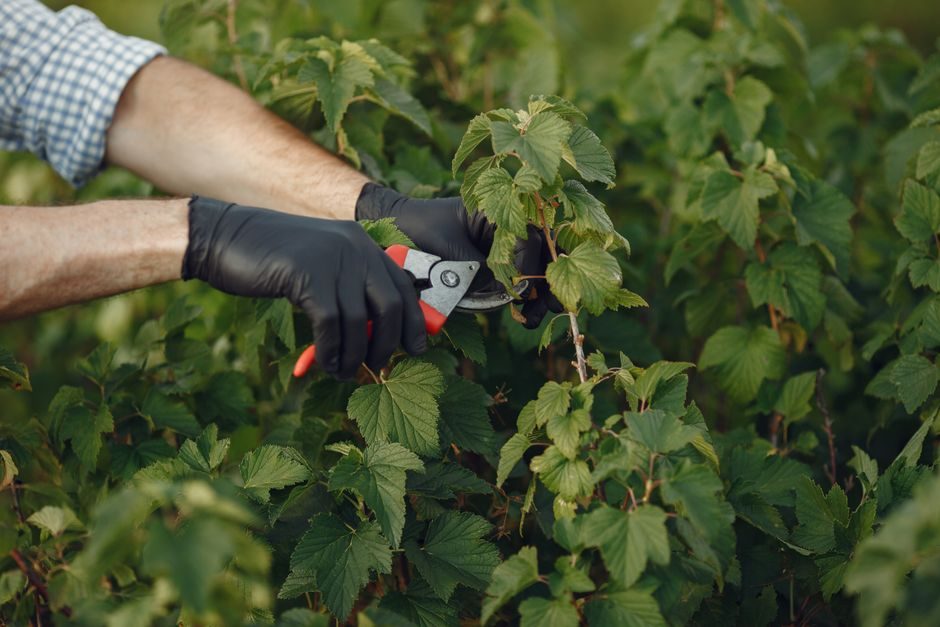
Summer-fruiting raspberries fruit on canes that grew the previous year. Once those canes have finished — you will know because the last fruit is gone and the leaves are starting to brown — they are done. Leave them in and they will shade out the young green canes coming up, crowd the row, and let fungal diseases get a foothold. Cut them out now, in late summer, and the new canes have the rest of the season to harden off before winter. The job takes under an hour for a typical row and leaves next summer's crop in a much better position.
What you need
Step by step
-
Stand at one end of the row and look along it before you cut anything. Old canes are brownish and woody, still carrying dried fruit stalks or the remains of them. New canes — next year's crop — are bright green, typically thinner, and growing from the base or just below the soil surface. Being certain you can tell them apart is the most important step of the job.
5 min -
Starting at one end, cut each old brown cane off at ground level. Use secateurs for anything up to about pencil thickness; switch to loppers for woodier canes. Cut flush to the base — a stump left above ground harbours disease and catches your legs on future visits. Drop cut canes to the ground as you go rather than pulling them out through the new growth, which can damage it.
20 min -
Gather all the cut canes and remove them from the row. If the plants look healthy, chop the canes into short lengths and add them to the compost heap — they are slow to break down whole. If you spotted any mould, purple discolouration, or blistering bark on the canes, bag them for the green waste bin or burn them. Do not compost diseased material.
5 min -
Thin the remaining green canes. Aim for 6 to 8 of the strongest per metre of row, spaced roughly 20 cm apart. Cut out or pull up any canes that are very thin, bent, or damaged, and remove any suckers coming up more than 30 cm outside the main row. A congested row fruits poorly and stays wet, which encourages disease.
10 min -
Tie the remaining canes to your support wires using soft twine or purpose-made ties. Work from the bottom wire upward, securing each cane at roughly 60 cm intervals. Tie firmly enough that winter wind will not shift them, but not so tight the twine cuts in as the cane thickens over autumn.
10 min
Afterwards
Check the row in four weeks and remove any late suckers that have appeared beyond the wire line. In mid-autumn, top the new canes at roughly 15 cm above the top support wire — cutting just above a bud — to encourage fruiting laterals lower down. Apply a handful of sulphate of potash around the base of each plant in late autumn to support next summer's fruiting. The tied-in canes need no further attention until early spring, when you remove any that did not survive winter.
Questions
How do I know if I have summer-fruiting or autumn-fruiting raspberries?
Summer-fruiting varieties such as Glen Ample and Malling Jewel finish cropping by late July or August. Autumn-fruiting varieties such as Autumn Bliss and Joan J are still carrying fruit now. If your canes have berries on them in late August, they are almost certainly autumn-fruiting — leave them alone and prune them to the ground in late winter instead.
My old canes are mixed in with new ones and I cannot tell them apart.
Look at the base. Old canes that fruited this year will be visibly woodier and darker at the base, and if you look closely you will see the dried remains of the flower stalks where berries were attached. If you genuinely cannot tell, wait two weeks — the difference becomes more obvious as the old canes die back.
Can I compost the pruned canes?
Yes, if the canes look clean and healthy. Chop them short first as they take a long time to break down whole. If there is any sign of cane blight — dark patches, shrivelled tips, or white patches of fungal growth — bin or burn them instead.
The row has become very congested after several years. Can I sort it out now?
You can do a harder thinning this season: keep only the best-placed new canes and remove everything else. The plants will not suffer. What you should not do now is move or divide the whole row — wait until late autumn or early spring for that.