Harvest and Cure Winter Squash and Pumpkins for Storage
- Hands on
- 90 min
- Start to finish
- 10 days
- Season
- autumn
- Level
- easy
- Makes
- a store of squash and pumpkins that should keep well into winter, longer for thick-skinned varieties
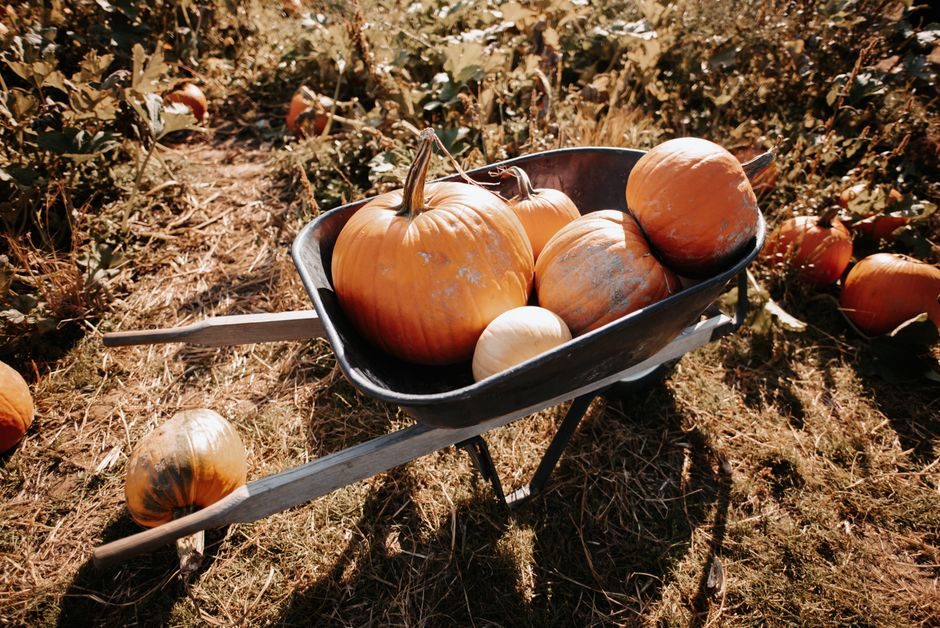
Winter squash and pumpkins are ready to come off the vine now, before the first frost touches the fruit. Picking them is not the whole job: a squash cut and put straight into a cupboard will often soften within weeks, while one cured properly first can keep for months. The difference comes down to leaving the stem on, giving it a week or so somewhere warm, and then finding it a cool, dry spot with room for air to move.
What you need
Step by step
-
Test for ripeness before cutting anything: press a thumbnail into the skin near the stem end. Ready fruit resists the pressure and has gone matte rather than glossy.
10 min -
Cut the stem with a sharp knife or secateurs, leaving 5-8cm attached in a T-shape. Don't pull, twist, or carry the fruit by the stem — a stem that tears away is the single biggest cause of squash rotting early in store.
20 min -
Carry each squash in both hands rather than by the stem, and load them into the wheelbarrow without stacking them deep enough to bruise the ones underneath.
15 min -
Wipe off dry soil with a cloth or soft brush. Leave the skin dry rather than washing it — a wet skin is far more likely to rot in store.
15 min -
Set aside any fruit with a split skin, a soft patch, or a stem that has already snapped off. Eat these within the week rather than trying to store them.
10 min -
Lay the sound fruit in a single layer somewhere warm and bright for 7 to 10 days — a greenhouse, a sunny windowsill, or a shed with the door left open. This hardens the skin and seals over small nicks picked up during harvest.
5 min -
Move the cured squash to a cool, dry, frost-free spot around 10-15°C with some airflow around them, spaced so they aren't touching. A shed shelf, a spare room or a cellar all work.
15 min
Afterwards
Check the store every week or two through winter and use up anything that develops a soft or dark patch before it spreads to fruit touching it. Compost split or damaged squash rather than storing them. Curing trays and the wheelbarrow just need brushing out before their next job.
Questions
Can I cure squash outdoors instead?
Only if daytime temperatures stay above about 15°C with no rain or frost forecast, and you bring them under cover at night — frost on the fruit will spoil it even after cutting.
What if the stem snaps off?
Use that one first. A squash without its stem plug dries out and softens at the cut within a few weeks, so eat it rather than storing it with the rest.
Which squash keep the longest?
Thick-skinned types like butternut can keep four to six months once cured. Thinner-skinned ones such as acorn or delicata are best used within six to eight weeks.
Do carving pumpkins store the same way?
The process is identical, but pumpkins bred for carving are often selected for size and colour rather than keeping, and can be more prone to soft patches than eating squash.