Mulch a Parsnip Row to Keep Digging It All Winter
- Hands on
- 60 min
- Season
- autumn
- Level
- easy
- Makes
- one parsnip row, diggable through winter
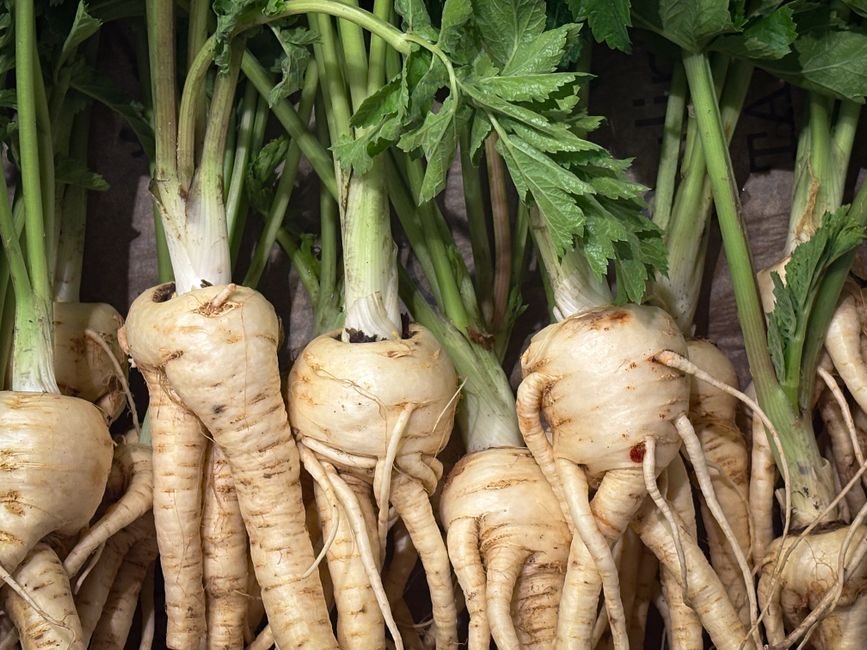
Parsnips are one of the few crops better left where they grew. A frost converts stored starches to sugar, so the flavour keeps improving into winter, and the roots store better in the soil than in a box. The problem comes when the ground itself freezes hard enough to stop a fork going in. A thick mulch laid now, before the first deep freeze, keeps the top few centimetres of soil workable all winter, so you can still get a root out on a cold evening. Mark the row well before you cover it — once it's under straw, it looks like the rest of the bed.
What you need
Step by step
-
Once the leaves start to die back in autumn, do a test dig on one root to check size — parsnips keep improving after a frost, so there's no need to rush the main lift.
10 min -
Cut the foliage back to about 2cm above the crown of each root, so the leaves don't rot down into the bed.
10 min -
Push a cane in at each end of the row, well clear of the roots, so you can find it once it disappears under mulch.
5 min -
Spread straw or bagged leaves at least 15cm deep over the row and a little either side, keeping it a few centimetres clear of the crowns.
15 min -
Weigh the mulch down with bricks or stones, or pin netting over it, so wind doesn't strip it before a hard frost arrives.
10 min -
On any day you want roots, pull back enough mulch to expose a short stretch, fork out what you need working from one end, and put the mulch straight back over the gap.
10 min
Afterwards
Work from one end of the row so you don't keep re-opening ground you've already cleared. By early spring, before new leaf growth starts, lift what's left, clear the mulch to the compost heap, and fork over the bed. Check any roots that sat under damp straw for slug holes or soft patches before you use them.
Questions
Do I need to lift parsnips before a hard freeze?
No — frost improves the flavour by turning stored starch to sugar. The mulch is there to keep the ground diggable, not to protect the roots from cold.
Can I use leaves instead of straw?
Yes. Bagged, part-rotted leaves work as well as straw and usually cost nothing — just pile them a bit deeper, since leaves compress more than straw.
Why does the straw source matter?
Some straw and manure carries aminopyralid weedkiller residue, which survives composting and can stunt or kill the following year's crops. Buy from a source that can confirm the field wasn't treated, or test a handful by growing a bean in it first.