Save Bean Seeds from Dried Pods
- Hands on
- 50 min
- Start to finish
- 14 days
- Season
- autumn
- Level
- easy
- Makes
- a labelled envelope of bean seed per variety
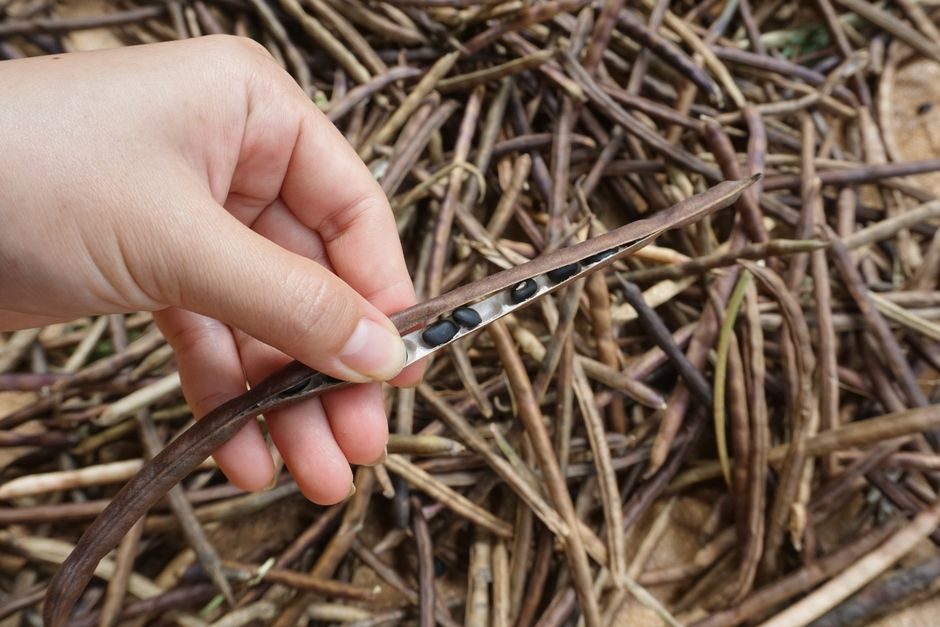
Runner beans, French beans and borlotti beans all set seed freely, and any pods left to dry on the plant become exactly what you need for next year. Pick them, shell them, finish drying them indoors, then pack them away. The work itself is straightforward; the discipline is in doing it properly. Seed that goes into storage with any moisture in it will not be there in spring. Choose pods from the strongest plants and from the best-formed fruits on those plants — not the runts and not from a vine that struggled. What you select now is what you will be growing.
What you need
Step by step
-
Mark your seed plants early in the season — tie a length of string around the base of three or four of your strongest, most productive vines. Stop picking those pods for eating and let them swell and dry undisturbed on the plant.
5 min -
Pick when fully dry. The pods should be papery brown and brittle, completely flat where they are not filled by seeds, and they should rattle when you shake them. Pick on a dry day after a stretch without rain. If a wet spell catches you with pods still on the plant, pick them anyway and bring them inside to finish drying on the tray for two weeks before shelling.
10 min -
Shell the pods into a bowl. Snap each pod along its seam and tip the seeds out. Any pod that is still slightly green, pliable at the hinge or damp inside is not ready — set it on the tray and give it another week before shelling.
15 min -
Sort the seeds. Discard anything visibly shrivelled, discoloured, soft or noticeably smaller than the rest of the batch. A few bad seeds per pod is normal; the point is not to carry them into storage.
5 min -
Spread the seeds in a single layer on the flat tray and put them somewhere warm and airy — a kitchen windowsill out of direct sun, or near a boiler. Leave for one to two weeks, turning them every few days. They need this even if the pods felt dry, because the seeds themselves often carry more moisture than the outside suggests.
5 min -
Test dryness before storing: press a thumbnail hard into the fattest seed you can find. If it dents, it needs more time. If it is hard enough that you cannot mark it, it is ready. Label a paper envelope with variety and year, tip the seeds in and seal.
10 min
Afterwards
Store the sealed envelopes in a cool, dry, dark place — a kitchen drawer away from the cooker, a tin in a cupboard, or a pantry shelf. Check after a month that no condensation has formed inside. Bean seeds kept below 10°C and away from damp hold viability for three to four years, though germination rates fall after the first season. Before relying on saved seed next spring, test ten seeds on damp kitchen paper: if fewer than six sprout within seven days, sow more densely or buy fresh for that variety.
Questions
Can I save seed from F1 hybrid varieties?
You can collect and sow them, but the plants will not grow true — offspring from F1 seed are unpredictable. Save from open-pollinated varieties only. Most heritage and heirloom varieties are open-pollinated; F1 will be marked clearly on the original packet.
How many plants should I save from?
At least three or four, ideally from different parts of the plot. Saving from a single plant gives a narrow gene pool and no buffer if that plant had a hidden weakness or cross-pollinated with something undesirable.
Will different bean varieties cross with each other?
Runner beans and French beans are different species and will not cross. Within the runner bean family, however, bees do move pollen between varieties, so if you grow two runner bean types side by side, expect some variation in saved seed after a few generations.
What about the seeds I culled — can I eat them?
Yes. The culled seeds have cosmetic faults, not anything that makes them inedible. Dry beans need soaking and boiling before eating in the usual way.