Stack Firewood Off the Ground to Season It Before Winter
- Hands on
- 190 min
- Season
- autumn
- Level
- moderate
- Makes
- roughly 1 cubic metre of stacked, airing firewood
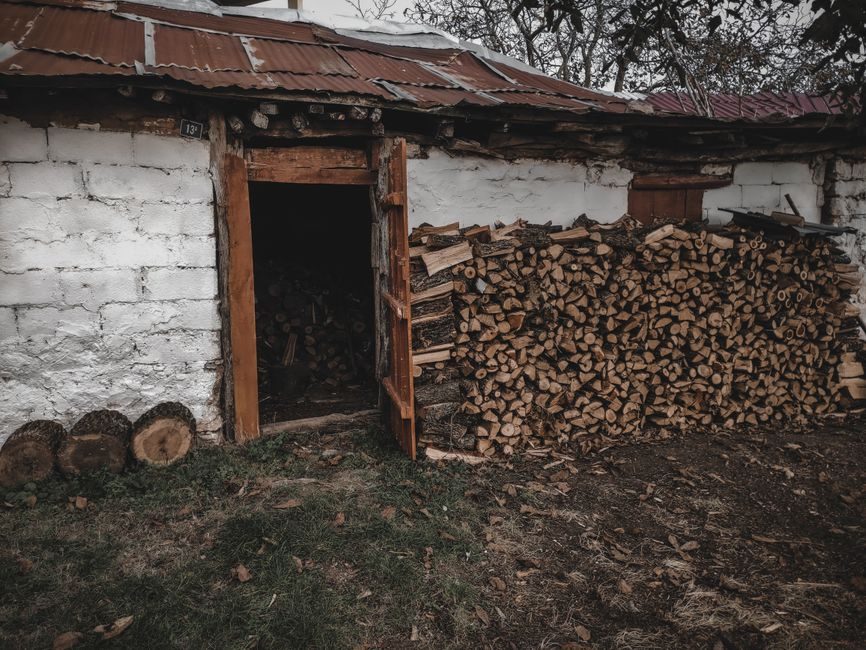
A pile of logs dumped against a wall stays wet where it touches the ground and never dries evenly, however long it sits there. Raising the wood clear of the soil, leaving the sides open to the wind, and covering only the top gets air moving through the whole stack so it seasons properly rather than just weathering in place. Build it now, while there's still dry working weather, and this year's wood has a real chance of being ready to burn instead of hissing and smoking through winter.
What you need
Step by step
-
Pick a site a few paces clear of the house wall and any shed, with sun and the prevailing wind reaching it if you can, and not under a tree that will drip onto it.
15 min -
Level the ground roughly and lay the pallets or bearers down to lift the first course clear of the soil.
20 min -
Drive a stake at each end of the run, deep enough to stay firm, to brace the stack as it's built and stop it leaning as it dries.
25 min -
Wheelbarrow the logs to the site and lay the first course bark-side up along the bearers, leaving a finger's width between logs rather than jamming them tight.
30 min -
Build up further courses the same way, keeping the face roughly vertical against the end stakes and checking it with a level every few courses.
60 min -
If either end is freestanding rather than against a wall or post, lay a few logs crosswise like a log-cabin corner to lock that end together.
20 min -
Stop once the stack reaches chest height or the wood runs out — taller than that is harder to keep stable and awkward to cap.
5 min -
Lay the tarpaulin or felt over the top course only, overhanging the sides by a hand's width, and tie it down so wind can't lift it.
15 min
Afterwards
Check the stack after any heavy wind or rain and re-tie or weight the cover if it's shifted. Re-stack any course that slumps or leans before it topples further. Leave the sides uncovered all winter so air keeps moving — wrapping the whole stack traps damp and slows seasoning rather than speeding it. Before burning, split a log and feel the inner face: if it's noticeably damp or hisses on the fire, give it longer.
Questions
How long does firewood actually take to season?
Softwood split to stove size is often dry enough in six to twelve months. Dense hardwood like oak or ash can take a full year, sometimes two, even when stacked well.
Does the whole stack need covering, not just the top?
No. Cover only the top course. Wrapping the sides traps moisture inside and slows drying far more than rain on the outer logs ever would.
Can I just stack the wood straight on the grass?
Not if you want it to dry. Ground contact keeps the bottom course permanently damp and starts it rotting before it's ever burned. A couple of pallets or treated bearers solve this cheaply.
Why keep it away from the house wall?
A stack pushed right up against the house holds damp against the brickwork and gives insects and rodents a sheltered route in. A gap of a metre or so is enough.